


📅 Published: February 17, 2026
Understanding DSCR loan requirements starts with one critical calculation: Net Operating Income divided by total annual debt service. However, the accuracy of that number depends entirely on how honestly you calculate NOI. A naive DSCR calculation uses gross rental income minus basic operating expenses. In contrast, a proper DSCR calculation loads in realistic vacancy, management fees, capital expenditure reserves, insurance at actual renewal rates, and all non-reimbursable expenses. The difference between these two calculations is often the difference between a loan that gets approved and one that doesn’t. In South Florida, where insurance costs alone can swing NOI by 15-25%, meeting DSCR loan requirements is the difference between a funded deal and a momentum-killing decline.
The DSCR Formula: Simple Math, Complex Inputs
The formula itself is straightforward:
DSCR = Net Operating Income (NOI) / Annual Debt Service
Most lenders require a minimum DSCR of 1.20x-1.25x for conventional commercial loans, 1.00x-1.10x for DSCR-based investment property loans, and 1.30x-1.40x for CMBS. Below the threshold, the loan doesn’t get approved — or the lender reduces loan proceeds until the ratio works. Therefore, understanding these thresholds is essential before submitting any application.
The complexity isn’t in the formula. It’s in the numerator. NOI is where sponsors, brokers, and even some lenders make critical errors that blow up the ratio downstream.
Naive DSCR vs. Properly Loaded DSCR: A Worked Example
Let’s walk through a real example. Consider a 24-unit apartment complex in Pompano Beach, Florida. The seller’s pro forma shows:
• Gross Scheduled Rent: $576,000 ($2,000/unit × 24 units × 12 months)
• Operating Expenses (per seller): $172,800 (30% expense ratio)
• NOI (per seller): $403,200
Proposed loan: $4,000,000 at 7.25%, 30-year amortization
Annual Debt Service: $327,456
Naive DSCR: $403,200 / $327,456 = 1.23x ✓ (barely passes at 1.20x threshold)
Now let’s load the expenses properly to see if this deal truly meets DSCR loan requirements:
Step 1: Realistic Vacancy and Credit Loss
The seller’s pro forma shows 0% vacancy because the property is currently 100% occupied. Lenders, however, don’t underwrite to current occupancy — they underwrite to economic vacancy, which includes physical vacancy, concessions, bad debt, and collection loss.
For a Class B/C multifamily in Broward County, a reasonable economic vacancy factor is 7-10%. As a result, even a fully occupied property gets haircut in the lender’s analysis.
Adjustment: $576,000 × 8% = -$46,080
Effective Gross Income: $529,920
Step 2: Property Management Fees
If you’re self-managing, you might think management fees don’t apply. Lenders disagree. Every institutional lender underwrites a management fee — typically 5-8% of effective gross income — regardless of whether you plan to self-manage.
Why? Because if you default and the lender takes the property, they’ll need to hire a manager. Consequently, the management fee is a real economic cost even if it’s currently not being paid to a third party.
Adjustment: $529,920 × 6% = -$31,795
Step 3: Capital Expenditure (CapEx) Reserves
CapEx reserves — also called replacement reserves — are a set-aside for future capital expenditures: roof replacement, HVAC systems, parking lot resurfacing, unit appliance replacement, plumbing, and electrical. However, most lenders require $250-$500 per unit per year for multifamily, depending on property age and condition.
Adjustment: 24 units × $400/unit = -$9,600
Step 4: Insurance at Actual Florida Rates
This is where South Florida deals blow up. Therefore, the seller’s pro forma may show insurance at the premium they’ve been paying for years with a grandfathered policy. When the property changes hands, however, the insurance resets — and in Florida’s current market, the new premium can be 40-80% higher than the prior owner’s cost.
Seller’s stated insurance: $48,000 ($2,000/unit)
Actual insurance quote for new buyer: $79,200 ($3,300/unit)
Adjustment: -$31,200 additional (above what’s in the seller’s expense figure)
Step 5: Real Property Taxes at Reassessed Value
In Florida, property taxes are based on assessed value, which is often below market value due to the Save Our Homes cap (for homestead) and assessment lag for commercial properties. When a property sells, the county reassesses at the purchase price.
For example, if the current assessed value is $2.8 million and you’re buying at $4.5 million, your tax bill increases proportionally.
Seller’s current taxes: $56,000 (based on $2.8M assessed value)
Post-acquisition taxes: $90,000 (based on $4.5M assessed value at 2.0% effective rate)
Adjustment: -$34,000 additional
Properly Loaded NOI Calculation
Starting from the seller’s stated NOI of $403,200:
• Vacancy/credit loss: -$46,080
• Management fee: -$31,795
• CapEx reserves: -$9,600
• Insurance adjustment: -$31,200
• Tax reassessment: -$34,000
Properly Loaded NOI: $403,200 – $152,675 = $250,525
Properly Loaded DSCR: $250,525 / $327,456 = 0.77x ✗
The deal went from a 1.23x DSCR to a 0.77x DSCR — a decline of 37% — simply by loading expenses properly. Additionally, this deal doesn’t qualify for any conventional financing at the proposed loan amount. The lender would need to reduce the loan to approximately $2,570,000 to achieve a 1.20x DSCR. Meanwhile, that means the borrower needs an additional $1,430,000 in equity.
Five DSCR Loan Requirements Mistakes That Kill Deals
Mistake 1: Using the Seller’s Insurance Premium
This is the number one DSCR killer in South Florida. Florida’s property insurance market is in structural crisis. Citizens Property Insurance — the state-backed insurer of last resort — has raised rates repeatedly. Additionally, private carriers have exited the state or dramatically increased premiums. Windstorm coverage, which is often separate from the primary policy, has seen the steepest increases.
The fix: Get your own insurance quote before underwriting the deal. Do not rely on the seller’s premium. Contact multiple brokers, including surplus lines specialists. Your actual insurance cost is the only number that matters for DSCR purposes.
Mistake 2: Ignoring the Tax Reassessment
Florida’s property tax system reassesses commercial properties upon sale. If you’re acquiring a property that has been held by the same owner for 15 years, the assessed value may be significantly below market. Your post-acquisition tax bill could be 40-60% higher than the seller’s current bill. This is not a risk — it’s a certainty. The county will reassess.
Mistake 3: Self-Managing and Excluding the Management Fee
Lenders include a management fee in their underwriting regardless of your management plan. If you exclude it from your analysis, your DSCR will be higher than the lender’s DSCR. Consequently, you’ll be surprised when the lender sizes the loan smaller than you expected.
Mistake 4: Using Current Rents Without Accounting for Concessions
If your property is offering one month free on a 12-month lease, the economic rent is not the face rent — it’s 91.7% of face rent. Moreover, if you’re using in-place rent rolls that reflect face rents, you’re overstating income. Lenders will catch this when they review the leases, and your DSCR will drop.
Mistake 5: Zero CapEx Reserves on Aging Properties
A 1985-vintage garden apartment complex in South Florida has significant capital needs. The flat roof has a 20-year life cycle, and HVAC systems in coastal environments corrode faster than inland. Furthermore, the parking lot needs resurfacing on a regular cycle. Excluding CapEx reserves from your NOI is not aggressive underwriting — it’s inaccurate underwriting. Lenders will add reserves back into their analysis, and your DSCR will drop accordingly.
How the South Florida Insurance Crisis Affects DSCR Loan Requirements
Florida’s property insurance crisis deserves special attention because it is the single biggest variable affecting DSCR calculations in the state. Here’s the scale of the problem:
• Average commercial property insurance in Florida has increased 50-100% since 2022 for many property types
• Windstorm deductibles of 3-5% of insured value are now standard — meaning a $5 million property has a $150,000-$250,000 deductible before insurance pays a single dollar
• Flood insurance in FEMA Special Flood Hazard Areas has increased under Risk Rating 2.0, with some coastal properties seeing 200-300% premium increases
• Several national carriers have exited Florida entirely, reducing competition and pushing more policies to Citizens and surplus lines carriers
For DSCR purposes, this means that otherwise solid properties — good location, strong rents, stable tenancy — can fail DSCR tests purely because of insurance costs. For example, a 20-unit apartment complex in Deerfield Beach generating $400,000 in gross rent might have looked great three years ago with $30,000 in annual insurance.
Today, with insurance at $75,000, that $45,000 swing directly reduces NOI and drops the DSCR by 0.15x-0.20x. As a result, many borrowers who previously met DSCR loan requirements now find themselves falling short — even with higher rents.
This creates a momentum-killer for acquisitions: the seller underwrote the deal based on their existing insurance costs, the buyer underwrites based on new insurance quotes, and the economics don’t bridge. Deals that worked in 2022 don’t work in 2026 at the same pricing, even if rents have increased, because insurance increases have outpaced rent growth.
Strategies to Improve DSCR Without Overpaying
When the DSCR doesn’t work, sponsors have several levers — some legitimate, some dangerous:
Legitimate strategies:
• Reduce loan amount. The most straightforward fix — bring more equity, borrow less. This improves DSCR mechanically by reducing debt service.
• Negotiate a lower purchase price. If the DSCR doesn’t work, the property may be overpriced relative to its income. Moreover, use the DSCR analysis as a negotiation tool with the seller.
• Extend amortization. Moving from 25-year to 30-year amortization reduces annual debt service by approximately 8-10%, thereby improving DSCR proportionally.
• Secure interest-only debt. Some lenders offer 1-3 years of interest-only payments, which significantly reduces debt service during the IO period.
However, this is temporary — the DSCR still needs to work at full amortization for the refi or reversion.
• Shop insurance aggressively. Work with multiple insurance brokers, including surplus lines specialists. Consider higher deductibles to reduce premiums. Additionally, explore group insurance programs through apartment associations.
• Appeal the tax assessment. If the county’s assessed value seems high, file a TRIM notice appeal. A successful appeal reduces taxes and improves NOI.
Dangerous strategies (avoid these):
• Inflating pro forma rents. Projecting rent increases that haven’t been achieved is a common temptation. As a result, lenders underwrite to in-place rents, not projections.
• Excluding real expenses. Leaving out CapEx reserves, management fees, or real insurance costs to make the DSCR work is a recipe for a declined loan — or worse, an approved loan that you can’t actually service.
• Relying on “lender flexibility.” Some sponsors assume the lender will waive the DSCR requirement because the deal “makes sense.” In reality, institutional lenders have policy minimums that aren’t negotiable at the loan officer level.
Protecting Momentum on DSCR-Sensitive Deals
The sponsors who avoid DSCR surprises are the ones who underwrite conservatively from Day 1. For example, they get insurance quotes before making an offer. Consequently, they calculate post-acquisition taxes, not current taxes. Moreover, they include management fees and CapEx reserves in every analysis, even on properties they plan to self-manage. They never use the seller’s pro forma as gospel.
DSCR is not just a lender’s metric — it’s a real measure of whether the property generates enough income to service its debt with a margin of safety. A property with a genuine 1.30x DSCR gives you room to absorb a rent decline, an insurance increase, or an unexpected capital expense without missing a debt service payment. In contrast, a property with a manufactured 1.20x DSCR — achieved by understating expenses — gives you no margin at all.
If you’re evaluating a deal and the DSCR is borderline, reach out to Anchor Commercial Capital. We can help you pressure-test the NOI, identify the real expense load, and determine whether the deal meets DSCR loan requirements — or whether the math is telling you something the seller isn’t.
About the Author
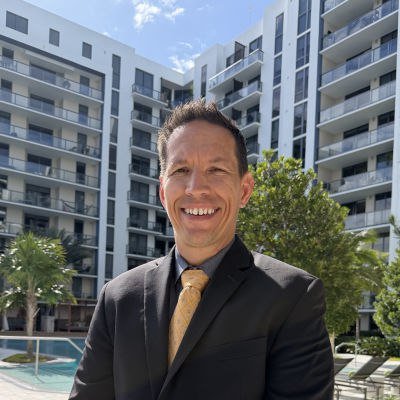
Brandon Brown is the founder of Anchor Commercial Capital, which exists to protect momentum when timing matters most. Based in Boca Raton, Florida, Brandon is a seasoned investor and technologist specializing in the intersection of commercial lending and data-driven deal execution. His professional background includes founding Rapid Surplus Refund and co-founding Lien Capital, experiences that inform his pragmatic approach to complex debt structures. Brandon is dedicated to providing sponsors with the clarity and execution certainty required in today’s volatile markets. Connect with Brandon on LinkedIn to discuss your next commercial deal.