


📅 Published: February 28, 2026
Should you go directly to a commercial lender or work with a broker? It’s one of the most common questions in commercial real estate financing — and the answer depends on your deal size, complexity, timeline, and experience level.
At Anchor Commercial Capital, we operate as both a direct lender for bridge loans and a capital advisor who places deals across 300+ lending sources. Here’s an honest breakdown of both approaches so you can make the right choice.
What Is a Direct Lender?
A direct lender originates and funds loans using their own capital (or a dedicated credit facility). When you work with a direct lender, you’re dealing with the decision-maker — the entity writing the check.
Examples of direct lenders:
- Banks and credit unions
- Debt funds and private credit firms
- Life insurance companies
- CMBS lenders
- Hard money lenders with their own balance sheet
- Agency lenders (Fannie Mae, Freddie Mac, HUD/FHA)
What Is a Commercial Loan Broker?
A commercial loan broker (also called a commercial mortgage broker or capital advisor) doesn’t lend their own money. Instead, they shop your deal across multiple lenders to find the best terms, then facilitate the transaction for a fee.
How brokers get paid:
- Origination fee (typically 0.5% – 2% of loan amount)
- Sometimes paid by the lender (yield spread premium)
- Some charge both borrower and lender fees
Direct Lender vs Broker: Side-by-Side Comparison
| Factor | Direct Lender | Broker |
|---|---|---|
| Speed | Often faster — one decision-maker, no middleman | Can be slower — shopping takes time, but good brokers pre-qualify |
| Rate/Terms | You get that lender’s rate — take it or leave it | Can compare 5-20+ offers to find the best rate |
| Cost | No broker fee, but lender fees still apply | Additional 0.5-2% broker fee, but may offset with better rate |
| Deal Complexity | Limited to what that lender does | Can find niche lenders for unusual deals |
| Expertise | Knows their own products deeply | Knows the entire lending landscape |
| Relationship | Direct access to underwriter and decision-maker | Broker manages lender communication |
| Approval Odds | If declined, you start over elsewhere | If one lender declines, broker submits to another |
| Transparency | Clear on pricing — what you see is what you get | Varies — some brokers mark up rates |
When to Go Direct
Working directly with a lender makes sense when:
- You know exactly which loan product you need — e.g., you want an SBA 504 loan and your local bank offers it
- Speed is critical — bridge loans and hard money often close faster direct
- Your deal is straightforward — stabilized property, strong financials, conventional structure
- You have an existing banking relationship — your bank may offer better terms for existing clients
- You want to save on broker fees — for simple deals, the broker fee may not add enough value
When to Use a Broker
A broker adds significant value when:
- Your deal is complex or unusual — mixed-use, cannabis, foreign national, bankruptcy recovery, or construction
- You’ve been denied by a bank — brokers know alternative lenders who handle non-standard deals
- You want the best possible terms — for large loans ($5M+), shopping across 10+ lenders can save hundreds of thousands in interest
- You’re new to commercial lending — a good broker guides you through the process and prevents costly mistakes
- You need multiple capital sources — structured deals with senior debt + mezzanine + preferred equity require a capital advisor
- You don’t have time to shop lenders yourself — brokers handle the legwork of applications, term sheet comparisons, and negotiations
Red Flags to Watch For
With Direct Lenders:
- Unreasonable upfront deposits before commitment
- Vague or shifting rate quotes
- No clear timeline for closing
- Pressure to accept immediately (“this rate expires today”)
With Brokers:
- Upfront fees before any work is done — legitimate brokers don’t charge until commitment or closing
- Unclear fee structure — always get the broker fee in writing
- No track record of closed deals — ask for references
- Submitting your deal to lenders without your knowledge (shotgunning)
- Marking up rates without disclosing the spread
The Hybrid Model: Broker-Lender
Some firms — including Anchor Commercial Capital — operate as both. We’re a direct lender for bridge loans (we can fund from our own capital sources within days) and a capital advisor for permanent financing, construction loans, and specialty products.
This hybrid model gives borrowers the best of both worlds:
- Immediate bridge financing directly from us (no middleman)
- Access to 300+ lenders for the permanent takeout or specialized capital
- One relationship, one point of contact, complete capital stack solutions
Frequently Asked Questions
Do I pay more using a broker than going direct?
Not necessarily. A good broker often negotiates better rates than you’d get on your own, because lenders give volume brokers preferred pricing. The broker fee (0.5-2%) may be offset entirely by rate savings over the loan term. On a $5M loan, a 0.25% rate improvement saves $12,500/year — easily covering a 1% broker fee over time.
Can I use a broker and still negotiate directly with the lender?
Generally no — once a broker introduces you to a lender, that lender works through the broker. Going around your broker is considered bad practice and can jeopardize your deal. Choose your approach upfront.
How do I verify a commercial loan broker is legitimate?
Check for: state mortgage broker license (required in many states), verifiable closed deal history, clear fee agreement, no upfront fees, professional references, and membership in industry organizations (MBA, CREF Council, NAIOP).
What size deal justifies using a broker?
Brokers add the most value on deals above $1 million, where rate shopping across multiple lenders can generate meaningful savings. For smaller deals, the broker fee as a percentage of the loan can be harder to justify unless the deal has complexity that requires specialized placement.
Need help deciding? Call Anchor Commercial Capital at (954) 289-5914 or email loans@anchorcreloans.com. We’ll tell you honestly whether your deal is better placed direct or brokered — and either way, we can help.
About the Author
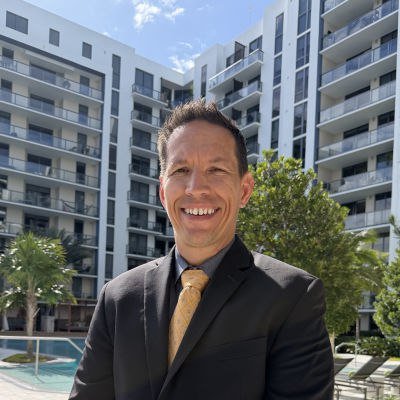
Brandon Brown is the founder of Anchor Commercial Capital, which exists to protect momentum when timing matters most. Based in Boca Raton, Florida, Brandon is a seasoned investor and technologist specializing in the intersection of commercial lending and data-driven deal execution. His professional background includes founding Rapid Surplus Refund and co-founding Lien Capital, experiences that inform his pragmatic approach to complex debt structures. Brandon is dedicated to providing sponsors with the clarity and execution certainty required in today’s volatile markets. Connect with Brandon on LinkedIn to discuss your next commercial deal.