


📅 Last Updated: October 4, 2026
Getting denied for an SBA loan is frustrating — but it’s not the end of the road. In fact, for many commercial real estate investors, the alternatives to SBA financing are faster, more flexible, and better suited to the deal at hand.
Here’s what actually works when the SBA says no.
When SBA Is the Wrong Tool for the Clock
One recent commercial real estate inquiry we reviewed had the classic SBA-alternative problem: the borrower needed a short, interest-only bridge window, but the package still needed stronger value support, payoff detail, ownership clarity, and a believable exit before any lender could quote responsibly.
That is the part borrowers often miss after an SBA slowdown or denial. The question is not simply, “Who will lend when SBA will not?” The better question is, “What is the fastest capital source that can understand the collateral, payoff, and exit without pretending this is a clean bank loan?”
SBA Alternative Sizing Formula
Bridge Need = Existing Payoff + Closing Costs + Working Capital/Reserves − Sponsor Cash Available
If the borrower cannot document those pieces, the loan request becomes a guess. However, when payoff, value, reserves, and exit are clear, a private bridge or non-bank lender can often move faster than an SBA process that is stuck in committee.
What to Prepare Before Asking for an SBA Alternative
- First, get the exact payoff or debt balance that must be cleared.
- Additionally, provide value support, not just a hopeful estimate.
- Most importantly, show how the bridge loan exits: sale, refinance, SBA takeout, permanent debt, or stabilization.
- Finally, explain what changed since the SBA path failed or became too slow.
Why SBA Loans Get Denied
Before exploring alternatives, it helps to understand the most common denial reasons — because each one points to a different solution.
The top SBA denial reasons:
- Credit score below 680 — SBA 7(a) and 504 programs have strict credit thresholds
- Insufficient collateral — the property or business assets don’t meet coverage ratios
- Time in business — less than 2 years of operating history
- Industry exclusion — SBA doesn’t fund certain property types (cannabis, speculative land, certain hospitality)
- Cash flow shortfall — DSCR below 1.25x on the proposed terms
- Previous default or bankruptcy — even resolved ones can trigger denials
- Complex ownership structures — multiple LLCs, foreign ownership, or trusts
- Loan amount too large — SBA 7(a) caps at $5M, 504 at ~$5.5M for most borrowers
Understanding which category you fall into determines which alternative makes the most sense.
Alternative 1: Commercial Bridge Loans
Best for: Time-sensitive deals, bank denials, credit issues, value-add properties
Bridge loans are the most common SBA alternative for commercial real estate. They’re short-term (6-24 months), asset-based, and close in 5-14 business days.
Key advantages over SBA:
- No minimum credit score requirement
- Close in days, not months (SBA averages 60-90 days)
- Asset-based underwriting — the property matters more than your financials
- No industry restrictions
- Loan amounts from $250K to $100M+
Typical terms:
|———–|————|———-|———|
| Parameter | Bridge Loan | SBA 7(a) | SBA 504 |
|---|---|---|---|
| Closing speed | 5-14 days | 60-90 days | 90-120 days |
| Credit minimum | None | 680+ | 680+ |
| Max loan | $100M+ | $5M | $5.5M |
| Rates | 8-13% | 7-9% | 6-7% |
| Term | 6-24 months | 10-25 years | 10-25 years |
| Down payment | 20-35% | 10-20% | 10% |
The trade-off: Higher rates, but the speed and flexibility often make the math work — especially when a deal has a 30-day close deadline and the SBA timeline would kill it.
Strategy: Use a bridge loan to acquire or stabilize, then refinance into a conventional or CMBS permanent loan at better rates once the property is performing.
Alternative 2: DSCR Loans (No Income Verification)
Best for: Rental investors, self-employed borrowers, borrowers with complex tax returns
DSCR (Debt Service Coverage Ratio) loans qualify you based entirely on the property’s rental income — not your personal income, W-2s, or tax returns.
Why this works when SBA fails:
- No personal income verification required
- No tax returns needed
- Credit scores as low as 620 accepted
- DSCR as low as 1.0x (break-even cash flow)
- Available for LLCs, trusts, and foreign nationals
Best property types for DSCR:
- Small multifamily (5-20 units)
- Single-family rental portfolios
- Mixed-use with residential component
- Short-term rentals with documented income
Rates: Typically 7-10% for 30-year fixed, depending on leverage and credit score.
Alternative 3: Hard Money Loans
Best for: Fix-and-flip projects, auction purchases, borrowers with recent bankruptcy or foreclosure
Hard money is pure asset-based lending. The property’s value (specifically the after-repair value or ARV) drives the approval — not your credit, income, or business history.
When hard money beats SBA:
- You need to close in under 2 weeks
- Your credit is below 600
- The property needs significant renovation (SBA won’t fund heavy rehab)
- You’re buying at auction and need proof of funds fast
- You have a recent bankruptcy, foreclosure, or short sale
Typical terms:
- Rates: 10-14%
- Points: 2-4 origination
- Term: 6-18 months
- LTV: Up to 75% of ARV
- Closing: 3-10 business days
Important: Hard money is expensive. It’s a tool for specific situations — not a permanent financing solution. Always have a clear exit strategy (sale or refinance).
Alternative 4: Private/Non-Bank Lenders
Best for: Deals that don’t fit any traditional box
The non-bank lending space has exploded. Debt funds, family offices, and private credit firms now fund deals that neither banks nor the SBA will touch.
What non-bank lenders will consider:
- Cannabis-related real estate (SBA won’t touch this)
- Debtor-in-possession (DIP) financing during bankruptcy
- Ground-up construction with limited borrower experience
- Foreign national borrowers
- Properties in rural or tertiary markets
- Complex capital stacks with mezzanine or preferred equity
How to find them: Work with a commercial mortgage broker who has relationships across the non-bank space. A good broker can match your deal to the right capital source in days.
Alternative 5: Seller Financing
Best for: Motivated sellers, low-down-payment situations, relationship-based deals
Sometimes the best alternative isn’t a bank or lender at all — it’s the person selling you the property.
How seller financing works:
- The seller acts as the lender, carrying back a note
- You make monthly payments directly to the seller
- Terms are fully negotiable (rate, amortization, balloon, down payment)
- No bank underwriting, no credit pulls, no appraisal requirements
When to propose seller financing:
- The property has been listed for 90+ days
- The seller owns it free and clear (no existing mortgage to pay off)
- The seller wants to defer capital gains taxes (installment sale)
- You can’t qualify for conventional financing right now
Pro tip: Many sellers will accept seller financing if you offer a higher purchase price in exchange for favorable terms. The total cost of capital may still be lower than hard money.
Alternative 6: CMBS (Commercial Mortgage-Backed Securities)
Best for: Stabilized properties over $2M, borrowers wanting non-recourse
CMBS loans are securitized commercial mortgages available for stabilized, income-producing properties. They offer non-recourse terms and longer loan durations.
Advantages:
- Non-recourse (no personal guarantee beyond standard carve-outs)
- Loan amounts from $2M to $100M+
- Fixed rates for 5, 7, or 10 years
- Less emphasis on borrower credit — more on property performance
Disadvantages:
- Slow closing (45-75 days)
- Rigid prepayment penalties (defeasance or yield maintenance)
- Limited flexibility after closing
- Minimum DSCR typically 1.25x
How to Choose the Right Alternative
|—————|—————–|
| Your Situation | Best Alternative |
|---|---|
| Need to close in < 30 days | Bridge loan |
| Rental property, don’t want to show income | DSCR loan |
| Fix-and-flip or heavy rehab | Hard money |
| Cannabis, DIP, or unusual property | Non-bank/private lender |
| Seller willing to negotiate | Seller financing |
| Stabilized property, want non-recourse | CMBS |
| Credit below 600 | Hard money or bridge |
| Foreign national | DSCR or bridge |
Common Mistakes After an SBA Denial
- Waiting too long — Deals don’t wait for financing. If your SBA application was denied after 60 days, you’ve already lost 2 months of momentum.
- Applying to another bank — If one bank said no, another bank will likely say no for the same reasons. The issue is usually the product type, not the specific lender.
- Not exploring the denial reason — The denial letter tells you exactly what to fix. Use it as a roadmap to find the right alternative.
- Assuming alternative = expensive — Yes, bridge and hard money rates are higher. But a deal that closes at 10% beats a deal that dies at 7%. Calculate the cost of NOT doing the deal.
- Skipping the exit strategy — Alternative financing is almost always temporary. Plan your refinance or sale exit before you take the bridge loan, not after.
How Anchor Can Help
We specialize in the deals banks and the SBA won’t do. Whether it’s a credit issue, a timeline crunch, or a property type that doesn’t fit conventional underwriting, we have capital solutions that close in 5-14 business days.
Start the conversation:
- Call: (954) 289-5914
- Email: loans@anchorcreloans.com
- Apply online: anchorcreloans.com/contact
About the Author
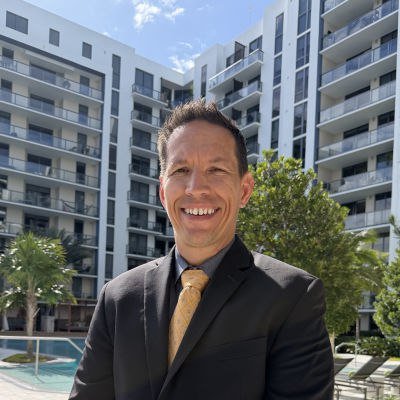
Brandon Brown is the founder of Anchor Commercial Capital, which exists to protect momentum when timing matters most. Based in Delray Beach, Florida, Brandon is a seasoned investor and technologist specializing in the intersection of commercial lending and data-driven deal execution. His professional background includes founding Rapid Surplus Refund and co-founding Lien Capital, experiences that inform his pragmatic approach to complex debt structures. Brandon is dedicated to providing sponsors with the clarity and execution certainty required in today’s volatile markets. Connect with Brandon on LinkedIn to discuss your next commercial deal.