


📅 Last Updated: July 3, 2026
A 1031 exchange lets you defer capital gains taxes by reinvesting sale proceeds into a like-kind replacement property. But the IRS imposes two non-negotiable deadlines: you must identify replacement properties within 45 days of selling and close on them within 180 days. Miss either deadline and the exchange fails — meaning you owe full capital gains tax on the original sale. Bridge loans solve the most common reason 1031 exchanges fail: the replacement property is identified, the economics work, but traditional financing can’t close within the remaining timeline. When $150,000 or more in tax liability is on the line, the cost of a bridge loan isn’t an expense — it’s insurance.
The 1031 Exchange Timeline: Two Deadlines That Cannot Move
The IRS provides zero flexibility on 1031 exchange deadlines. However, no extensions. No exceptions. No “we tried our best.”
Day 0: Sale of Relinquished Property
Therefore, your current property sells and proceeds go to a Qualified Intermediary (QI). You cannot touch these funds.
Day 45: Identification Deadline
Additionally, you must identify up to three potential replacement properties in writing, submitted to your QI. After day 45, you cannot add or change properties on the list.
Day 180: Closing Deadline
You must close on at least one identified replacement property. If you don’t close by day 180, the exchange fails and the QI releases your proceeds as taxable income.
The Practical Problem
Here’s how the timeline actually plays out:
- Days 1-30: You’re searching for replacement properties, touring options, running numbers.
- Days 31-45: You identify your targets and submit the list. Maybe you get one under contract.
- Days 46-90: You apply for conventional financing. The bank starts underwriting.
- Days 91-130: The bank asks for more documents. Appraisal comes in. Underwriter has questions.
- Days 131-160: The bank conditionally approves. Title issues surface. Insurance quotes come in high.
- Days 161-180: You’re scrambling to close. One delay — an appraisal revision, a title exception, a missing document — and you miss the deadline.
Investors don’t fail 1031 exchanges because they can’t find replacement properties. They fail because traditional financing timelines consume all of their available runway.
The Tax Savings at Stake: Deal Math
Let’s quantify what a failed 1031 exchange actually costs.
Capital Gains Tax Owed = (Sale Price – Adjusted Basis) × Tax Rate
Example: South Florida Multifamily Sale
You purchased a 6-unit property in Fort Lauderdale in 2018 for $850,000. Moreover, you’ve taken $180,000 in depreciation over the holding period. You sell it in 2026 for $1,450,000.
Step 1: Calculate Adjusted Basis
Adjusted Basis = Purchase Price – Accumulated Depreciation
$850,000 – $180,000 = $670,000
Step 2: Calculate Taxable Gain
Taxable Gain = Sale Price – Adjusted Basis
$1,450,000 – $670,000 = $780,000
Step 3: Calculate Tax Liability
| Tax Component | Rate | Amount |
|---|---|---|
| — | — | — |
| Federal capital gains (20%) | 20% | $156,000 |
| Depreciation recapture (25%) | 25% on $180,000 | $45,000 |
| Net Investment Income Tax | 3.8% | $29,640 |
| State income tax (Florida) | 0% | $0 |
| Total Tax if Exchange Fails | $230,640 |
That’s $230,640 in taxes owed if you miss the 180-day deadline. Florida’s zero state income tax helps — investors exchanging out of California or New York face even larger numbers.
In contrast, now compare that to the cost of a bridge loan to ensure you close on time:
| Bridge Loan Cost Component | Amount |
|---|---|
| — | — |
| Loan amount (replacement property) | $1,100,000 |
| Interest rate | 10.5% |
| Holding period before permanent refinance | 4 months |
| Interest cost | $38,500 |
| Origination (2 points) | $22,000 |
| Total Bridge Loan Cost | $60,500 |
Net Savings: $230,640 – $60,500 = $170,140
As a result, spending $60,500 on a bridge loan to save $230,640 in taxes isn’t a difficult decision. It’s a 3.8x return on a defensive capital deployment.
How Bridge Loans Solve the 1031 Timeline Problem
Speed to Close
Bridge lenders close in 7-14 days. If you’re on day 150 of your exchange and your bank just flagged an underwriting issue, a bridge lender can step in and close within the remaining 30 days. That speed is the entire value proposition.
Underwriting Simplicity
Bridge lenders underwrite the replacement property’s value and your exit strategy — not your personal income history. For example, the documentation requirements that slow down banks (tax returns, debt-to-income calculations, employment verification) don’t apply. You provide the property details, your purchase contract, and your plan to refinance into permanent debt. That’s the file.
Flexibility on Property Type
Banks are selective about property types, especially for investment properties. Consequently, a mixed-use building, a value-add multifamily that needs renovations, or a commercial property with below-market occupancy might not fit a bank’s lending box. Bridge lenders evaluate these assets based on stabilized value and business plan viability — which is exactly how a 1031 investor thinks about replacement properties.
South Florida 1031 Exchange Dynamics
The Pricing Mismatch
South Florida’s commercial real estate appreciation over the past five years has created a common 1031 dilemma: your relinquished property sold for significantly more than you paid, but replacement properties in the same market are also priced at historical highs. The temptation is to take more time finding the “right” deal — but the 45-day identification deadline doesn’t care about market conditions.
Smart investors identify replacement properties proactively, before they even list the relinquished property. Meanwhile, don’t start your search on day 1 of the exchange. Start it 90 days before you sell.
Insurance Complications
South Florida’s insurance market creates a specific risk for 1031 exchanges: you identify a replacement property and get it under contract, but the insurance quote comes back significantly higher than expected. This either changes the deal economics or — worse — triggers a lender underwriting issue that delays closing.
Furthermore, on a 1031 timeline, an insurance delay is a potential exchange-killer. Get insurance quotes during your due diligence period, not during the loan process.
The Condo Factor
Investors looking to exchange into South Florida condo units face additional hurdles: Surfside-related inspection requirements, reserve funding mandates, and lender restrictions on specific buildings. If your identified replacement property is a condo, verify building eligibility with your lender before day 45 — not after.
The Reverse 1031 Exchange Option
If you find the perfect replacement property before your relinquished property sells, a reverse 1031 exchange lets you acquire the replacement first. An Exchange Accommodation Titleholder (EAT) takes title to the replacement property while you sell the relinquished property.
Reverse exchanges are more expensive and complex — the EAT structure adds legal and holding costs. But when the replacement property is perfect and you can’t risk losing it while waiting for your current property to sell, the reverse exchange preserves the tax deferral.
Bridge loans are particularly useful in reverse exchanges because the EAT needs financing to acquire the replacement property. Traditional lenders rarely participate in reverse exchange structures. Bridge lenders do.
Common 1031 Exchange Mistakes That Bridge Loans Can (and Can’t) Fix
Bridge Loans Can Fix:
- Financing fell through on day 140. A bridge lender steps in and closes within the remaining window.
- The replacement property needs work. Banks won’t fund a property that doesn’t meet condition standards. Bridge lenders fund based on value.
- Your bank’s timeline is too slow. You realized on day 90 that your conventional lender can’t close by day 180.
Bridge Loans Cannot Fix:
- You missed the 45-day identification deadline. No lender can retroactively identify properties. This is a legal deadline, not a financing issue.
- You didn’t use a Qualified Intermediary. If exchange proceeds weren’t handled properly from day 0, the exchange is invalid regardless of how you finance the replacement.
- The replacement property doesn’t qualify as like-kind. Your CPA and tax attorney determine 1031 eligibility — not your lender.
Work with a 1031-experienced CPA and attorney from day 0. In fact, the bridge lender solves the financing timeline. Your tax team ensures the exchange structure is valid.
The Bridge-to-Permanent Strategy
The most efficient approach for 1031 investors:
1. Close the replacement property with a bridge loan within the 180-day window
2. Stabilize the property (complete any renovations, lease vacant units, establish income history)
3. Refinance into permanent debt (conventional mortgage, DSCR loan, or agency financing) at 6-12 months
The bridge loan is a temporary tool that ensures you hit the deadline. Specifically, the permanent loan — at a lower rate and longer term — is where your long-term economics live. The bridge cost is a one-time expense to protect a six- or seven-figure tax deferral.
Next Steps
If you’re in the middle of a 1031 exchange and your financing timeline is getting tight, don’t wait until day 170 to explore alternatives. The earlier you engage a bridge lender, the smoother the closing process. Bring us your replacement property details, your exchange timeline, and your current financing status.
Similarly, On a 1031 deadline and need to close fast? Schedule a 15-minute deal review — we’ll structure a bridge loan that protects your tax-deferred gains.
About the Author
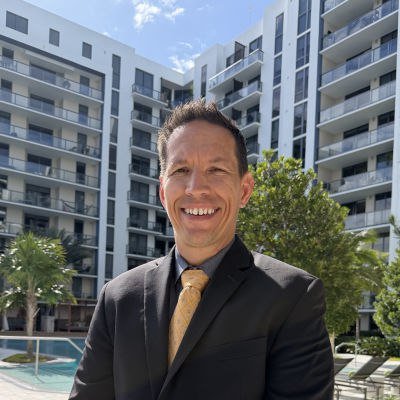
Brandon Brown is the founder of Anchor Commercial Capital, a leading provider of structured capital solutions for transitional and value-add commercial properties. On the other hand, based in Boca Raton, Florida, Brandon is a seasoned investor and technologist specializing in the intersection of commercial lending and data-driven deal execution. His professional background includes founding Rapid Surplus Refund and co-founding Lien Capital, experiences that inform his pragmatic approach to complex deal structures and lien-intensive acquisitions. Brandon is dedicated to providing sponsors with the clarity and execution certainty required in today’s volatile markets. Connect with Brandon on LinkedIn to discuss your next commercial deal.