


📅 Last Updated: October 4, 2026
When a bank denies your commercial real estate loan, you have two paths: start the application process over with another bank — which takes another 30-60 days you probably don’t have — or move to an alternative commercial lender that underwrites differently. Alternative lenders include private lenders, bridge lenders, debt funds, and hard money lenders. They evaluate deals based on asset value, cash flow potential, and exit strategy rather than the personal income documentation and rigid underwriting boxes that caused your bank denial. For investors with a deal under contract and a clock ticking, the alternative path isn’t a fallback — it’s the only path that preserves your momentum.
A Bank “No” Is Usually a Box Problem, Not a Death Sentence
One pattern we keep seeing: the bank decline often says more about the lender’s box than the collateral. A borrower may have a real asset, a reasonable plan, and a valid need for capital, but still fail bank underwriting because the timeline is too short, documentation is incomplete, income is not bank-clean, or the requested structure does not fit SBA or conventional rules.
That does not mean the deal is automatically financeable. It means the next step is diagnostic. Before sending the file everywhere, figure out what killed the bank path: credit, collateral, cash flow, timing, title, use of proceeds, entity complexity, or exit risk.
Post-Denial Triage Checklist
- What exactly did the bank reject? Borrower, collateral, cash flow, documentation, or timing?
- What has to close now? Purchase, refinance, payoff, rescue capital, or stabilization money?
- What can be proven today? Value, payoff, ownership, liquidity, insurance, and exit.
- Which lender lane fits the real issue? Bridge, private credit, hard money, DSCR, debt fund, or SBA takeout later.
Why Banks Deny Commercial Loans (It’s Rarely About the Deal)
Bank denials frustrate investors because the property is often a solid deal. The rejection isn’t about the real estate — it’s about the borrower’s file not fitting the bank’s underwriting template.
Here are the most common denial reasons:
1. Insufficient Documented Income
You earn $400,000 a year across rental properties, consulting, and business distributions — but your tax returns show $85,000 after depreciation, write-offs, and pass-through losses. The bank underwrites what the tax return says, not what you actually earn.
2. Too Many Financed Properties
Conventional lenders cap financed investment properties at 10 (Fannie Mae guideline). If you already own 10+ properties with mortgages, the bank can’t add another — regardless of how strong the new deal is.
3. Property Condition Issues
The property needs work. The roof has three years left. The HVAC is original. The bank’s appraiser flags deferred maintenance, and the underwriter kills the deal because the property doesn’t meet their condition standards at the time of funding.
4. Seasoning Requirements
You bought a property six months ago and want to refinance based on its improved value. The bank requires 12 months of ownership seasoning. You wait, or you find a lender who doesn’t impose that requirement.
5. Complex Entity Structures
You hold properties in multiple LLCs, a land trust, or a holding company structure. The bank’s underwriting team can’t (or won’t) untangle it. Denial.
None of these reasons mean the deal is bad. They mean the bank’s process can’t accommodate your situation.
The Momentum-Killer: What a Bank Denial Actually Costs You
A bank denial isn’t just a “no.” It’s a time tax. Here’s the real cost:
Cost of Delay = (Days Lost × Daily Carrying Cost) + Opportunity Cost of Missed Deals
The Math
You’ve been in underwriting with your bank for 40 days. They deny the loan on day 40. Now you have two options:
Option A: Try another bank
- New application, new document collection: 5-7 days
- New underwriting cycle: 30-45 days
- Total additional time: 35-52 days
- Total elapsed time from original application: 75-92 days
Option B: Move to an alternative lender
- Application and document collection: 1-2 days
- Underwriting and approval: 3-7 days
- Closing: 7-14 days
- Total additional time: 11-23 days
- Total elapsed time from original application: 51-63 days
If you have a property under contract with a 60-day closing deadline, Option A doesn’t just cost you time — it costs you the deal. Your earnest money deposit. Your inspection costs. The months of deal sourcing that found this property in the first place.
In South Florida, where sellers regularly receive multiple offers within the first week of listing, asking for a 30-day extension because your bank fell through often means the seller moves to the backup offer.
The cost of starting over isn’t measured in interest rate basis points. It’s measured in lost deals.
Traditional vs. Alternative Lending: A Direct Comparison
| Factor | Traditional Bank | Alternative / Private Lender |
|---|---|---|
| — | — | — |
| Underwriting focus | Borrower income + credit | Property value + exit strategy |
| Income documentation | Full (tax returns, P&L, pay stubs) | Minimal to none |
| Credit score minimum | 680-720+ | 620-660+ |
| Property condition | Must meet bank standards | Funds distressed/value-add properties |
| Closing timeline | 30-60 days | 7-21 days |
| Maximum properties | Often capped at 10 | No limit |
| Entity lending | Limited, often requires personal name | LLC/entity friendly |
| Rate range | 6.5-8% | 8-13% |
| LTV | Up to 80% | Up to 75-90% (depending on program) |
| Prepayment penalty | Often 3-5 years | Typically 0-6 months |
| Best for | Stabilized, long-hold properties | Acquisitions, bridge, value-add, speed |
The rate differential is obvious. But rate is only one variable in the total cost equation. If a bank’s 7% rate comes with a 60-day closing timeline and your deal has a 30-day deadline, that rate is theoretical — you’ll never actually get it.
Types of Alternative Commercial Lenders
Bridge Lenders
Short-term financing (6-24 months) for acquisition, renovation, or stabilization. You acquire the property, execute your business plan, then refinance into permanent debt or sell. Bridge lenders move fast — 7-14 day closings are standard.
Private / Hard Money Lenders
Asset-based lenders who fund primarily on property value. Higher rates (10-13%), but minimal documentation requirements and the fastest closings in the market. Ideal for distressed properties that banks won’t touch.
Debt Funds
Institutional private lenders with larger balance sheets. They offer bridge and value-add loans at slightly better rates than hard money (8-11%) with more structured underwriting. Good for larger deals ($1M+) where you need certainty of execution.
DSCR Lenders
Qualify based on the property’s rental income — no personal income verification. Ideal for buy-and-hold investors scaling rental portfolios. Longer terms (30-year amortization) with rates in the 7.5-9.5% range.
South Florida Context: Why Alternative Lending Is Growing Here
Insurance-Driven Denials
South Florida’s property insurance crisis has created a new category of bank denials. If the property’s insurance costs push the debt-service-coverage ratio below the bank’s threshold, the loan gets denied — even if the borrower is pristine. Alternative lenders have more flexibility to underwrite around elevated insurance costs, particularly on short-term bridge loans where insurance is a temporary holding cost, not a permanent operating expense.
Condo Market Complications
Post-Surfside structural inspection and reserve requirements have made many South Florida condos ineligible for traditional financing. Banks are applying blanket restrictions on condo lending in buildings that haven’t completed milestone inspections or met reserve funding requirements. Alternative lenders evaluate these situations deal-by-deal rather than applying building-wide bans.
Speed in a Competitive Market
South Florida’s investment property market — particularly multifamily and small commercial — moves fast. Properties in Fort Lauderdale, Boca Raton, and West Palm Beach routinely go under contract within days of listing. Investors who need 45-60 days to close through a bank are competing against cash buyers and bridge-financed buyers who can close in 10-14 days. The speed advantage of alternative lending isn’t marginal here — it’s decisive.
The Right Sequence After a Bank Denial
If your bank just denied your commercial loan, here’s the action plan:
Step 1: Get the Denial Reason in Writing
Ask the bank for the specific reason. “Didn’t meet underwriting guidelines” isn’t specific enough. Was it income documentation? Property condition? DSCR ratio? The denial reason determines which alternative lender is the right fit.
Step 2: Assess Your Timeline
How much time do you have before your contract expires or your deal falls apart? If you have 30+ days, you may have options across multiple alternative lender types. If you have 14 days or less, you need a hard money or bridge lender who can underwrite and close on that timeline.
Step 3: Prepare Asset-Based Documentation
Alternative lenders want different documents than banks:
- Property address, purchase price, and estimated value
- Rent roll or projected rents (for income properties)
- Scope of work and budget (for renovation projects)
- Exit strategy (refinance, sale, or stabilization timeline)
- Entity documents (LLC operating agreement, EIN)
Notice what’s not on this list: two years of tax returns.
Step 4: Get a Term Sheet Before You Commit
A credible alternative lender will issue a term sheet — outlining rate, LTV, term, fees, and closing timeline — within 24-48 hours. If a lender can’t produce a term sheet quickly, they can’t close quickly either.
When Alternative Lending Is the Wrong Move
Alternative lenders aren’t the right fit for every situation:
- If you’re buying a stabilized property for long-term hold and you have 60+ days to close, a conventional loan’s lower rate will save you significant money over the life of the loan. Use the time to find the right bank.
- If the deal itself is bad, faster financing doesn’t fix bad economics. Run your numbers before you shop for a lender.
- If you can’t articulate an exit strategy, bridge and hard money lenders need to know how you’ll repay. “I’ll figure it out” isn’t an exit strategy.
Alternative lending solves timing and underwriting problems. It doesn’t solve bad deals.
Next Steps
If your bank just said no and you have a deal that needs to close, don’t start the bank process over. Bring us the deal — purchase price, property details, and your timeline. We’ll tell you within 24 hours whether we can fund it and how fast.
Need a second opinion after a bank denial? Schedule a 15-minute deal review — we’ll evaluate the deal and give you a term sheet, not a runaround.
About the Author
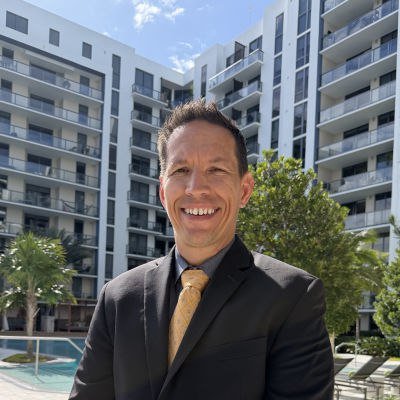
Brandon Brown is the founder of Anchor Commercial Capital, a leading provider of structured capital solutions for transitional and value-add commercial properties. Based in Delray Beach, Florida, Brandon is a seasoned investor and technologist specializing in the intersection of commercial lending and data-driven deal execution. His professional background includes founding Rapid Surplus Refund and co-founding Lien Capital, experiences that inform his pragmatic approach to complex deal structures and lien-intensive acquisitions. Brandon is dedicated to providing sponsors with the clarity and execution certainty required in today’s volatile markets. Connect with Brandon on LinkedIn to discuss your next commercial deal.