


📅 Last Updated: February 17, 2026
Recourse vs. non-recourse is not a binary choice — it is a spectrum. Every “non-recourse” commercial loan contains carve-out provisions that can convert the loan to full recourse under specific triggering events. The real question is not whether you have recourse exposure, but how much and under what conditions. Understanding this spectrum is essential for any sponsor structuring debt on commercial real estate, particularly in coastal markets like South Florida where environmental and insurance-related carve-outs add layers of guarantor risk that inland sponsors rarely encounter.
The Recourse Spectrum: Why “Non-Recourse” Is a Misnomer
When a lender offers a “non-recourse” loan, what they are really offering is a loan where the borrower’s liability is limited to the collateral — unless certain events occur. Those events are defined in the carve-out guaranty, sometimes called the “bad boy” guaranty. The moment a carve-out is triggered, the guarantor’s personal assets are exposed, and the loan effectively becomes full recourse.
Think of commercial loan guarantees as existing on a continuum:
Full Recourse → Recourse with Burn-Off → Non-Recourse with Broad Carve-Outs → Non-Recourse with Narrow Carve-Outs → True Non-Recourse (Rare)
Most CMBS loans, agency loans, and institutional bridge facilities fall somewhere in the middle. However, the sponsor’s job — and the advisor’s job — is to understand exactly where on that spectrum a given term sheet falls, and to negotiate the carve-outs down to the narrowest defensible position.
Bad Boy Carve-Outs: The Provisions That Matter
Bad boy carve-outs are the provisions that convert a non-recourse loan to full recourse upon the occurrence of specific “bad acts” by the borrower or guarantor. They typically fall into two categories:
Full Recourse Triggers (Loss Carve-Outs)
These events make the guarantor liable for the entire outstanding loan balance. They include:
• Voluntary bankruptcy filing by the borrower entity
• Collusive involuntary bankruptcy where the borrower cooperates with creditors to file
• Fraud or intentional misrepresentation in loan documents
• Unauthorized transfer of the property or ownership interests
• Violation of SPE (Single Purpose Entity) covenants — commingling assets, failing to maintain corporate separateness
These are the “nuclear” carve-outs. Triggering any one of them means the guarantor is personally on the hook for the full loan amount — not just losses, but the entire outstanding principal balance plus accrued interest, fees, and enforcement costs.
Loss-Only Carve-Outs
These provisions make the guarantor liable only for actual losses suffered by the lender as a result of specific actions:
• Environmental contamination — guarantor covers remediation costs
• Waste or removal of property — deliberate damage or stripping of assets
• Failure to maintain insurance — if a casualty occurs during a lapse
• Misapplication of rents, insurance proceeds, or condemnation awards
• Unpaid real estate taxes or ground rent beyond specified thresholds
The distinction between full recourse triggers and loss-only carve-outs is critical. Therefore, a loss-only carve-out limits your exposure to actual damages. Additionally, a full recourse trigger exposes you to the entire loan balance regardless of loss.
The Guarantor Exposure Formula
To quantify your true guarantor exposure on a “non-recourse” loan, use this framework:
Maximum Guarantor Exposure = Full Recourse Trigger Probability × Outstanding Loan Balance + Σ (Loss Carve-Out Probabilityi × Estimated Lossi)
Let’s work through an example. Moreover, suppose you are guaranteeing a $12 million CMBS loan on a mixed-use property in Boca Raton:
• Outstanding loan balance: $12,000,000
• Probability of triggering a full recourse event (SPE violation, bankruptcy): estimated at 2%
• Environmental carve-out: estimated 5% probability, estimated remediation cost of $800,000
• Insurance lapse carve-out: estimated 3% probability, estimated loss of $2,000,000 (partial casualty during lapse)
• Waste/property damage carve-out: estimated 1% probability, estimated loss of $500,000
Expected Guarantor Exposure:
(0.02 × $12,000,000) + (0.05 × $800,000) + (0.03 × $2,000,000) + (0.01 × $500,000)
= $240,000 + $40,000 + $60,000 + $5,000
= $345,000 in expected exposure
That $345,000 is the probability-weighted cost of your guarantee. As a result, but remember — the maximum exposure on a full recourse trigger is $12 million plus fees. This is why sponsors who dismiss carve-outs as “standard” are making a potentially catastrophic mistake.
Environmental Indemnities: The South Florida Wild Card
In coastal South Florida — from Palm Beach County down through Broward and Miami-Dade — environmental carve-outs carry outsized risk that many sponsors underestimate. Here’s why:
Hurricane and flood damage creates secondary environmental exposure. When a Category 4 storm hits a commercial property, the primary damage is structural. For example, but the secondary damage — ruptured fuel tanks, displaced hazardous materials from adjacent properties, contaminated stormwater infiltrating the site — can trigger the environmental indemnity in your guaranty. You are now personally liable for remediation costs that have nothing to do with your operations.
This is a momentum-killer that catches sponsors off guard. You close a clean deal on a retail center in Deerfield Beach. Two years later, a hurricane pushes contaminated groundwater from a neighboring gas station onto your site. Your Phase I was clean at closing. Doesn’t matter — the environmental indemnity in most non-recourse loans is ongoing, not point-in-time. The guarantor is liable for environmental conditions that arise during the loan term, not just those that existed at origination.
Negotiating Environmental Carve-Outs in Coastal Markets
Smart sponsors in South Florida negotiate specific limitations on environmental indemnities:
• Cap the indemnity at a specific dollar amount or percentage of the loan
• Exclude force majeure environmental events — hurricane-caused contamination from off-site sources
• Require the lender to accept environmental insurance as a substitute for personal guaranty
• Limit indemnity to conditions caused by the borrower’s operations, not pre-existing or third-party contamination
• Negotiate a sunset provision — the environmental indemnity expires a set number of years after loan payoff
Environmental insurance policies — specifically Pollution Legal Liability (PLL) policies — can be a powerful tool in this negotiation. Consequently, a $2 million PLL policy might cost $15,000-$25,000 annually, but it replaces unlimited personal exposure with a defined, insured risk. Meanwhile, many CMBS servicers and bridge lenders will accept this trade.
Completion Guarantees: The Construction and Value-Add Trap
If you are taking out a bridge loan or construction loan for a value-add project — and in South Florida’s current market, many sponsors are — you will encounter the completion guaranty. This is separate from the bad boy carve-outs and deserves its own analysis.
A completion guaranty requires the guarantor to personally fund any cost overruns necessary to complete the renovation or construction project as defined in the approved budget and scope. The lender’s position is simple: they underwrote a stabilized value. If the project isn’t completed, the stabilized value doesn’t exist, and the loan is underwater.
The momentum-killer here is scope creep combined with cost escalation. Furthermore, in South Florida’s construction market, labor costs have increased 18-22% over the past three years. Materials — particularly hurricane-rated impact windows, roofing systems, and concrete — carry premiums that mainland markets don’t face. A 15% construction contingency that would be adequate in Atlanta or Dallas is dangerously thin in Palm Beach County.
Structuring Completion Guarantees to Protect Momentum
• Negotiate a completion guaranty cap — typically 10-25% of the total project budget
• Require lender approval for budget reallocations rather than treating any line-item overrun as a guaranty trigger
• Build in a contingency reserve that the lender funds as part of the loan proceeds
• Define “completion” precisely — substantial completion vs. In fact, full punch-list completion vs. Specifically, certificate of Occupancy
• Include a force majeure carve-out for hurricane-related construction delays and cost increases
Recourse Burn-Off Provisions
One of the most valuable — and most frequently overlooked — negotiating points in commercial loan structuring is the recourse burn-off. This is a provision where the loan starts as full recourse and converts to non-recourse (with standard carve-outs) upon the achievement of specific milestones.
Common burn-off triggers include:
• Debt service coverage ratio (DSCR) exceeding a threshold (typically 1.25x-1.35x) for two consecutive quarters
• Loan-to-value (LTV) declining below a threshold (typically 65-70%) based on a new appraisal
• Occupancy stabilization — achieving and maintaining a target occupancy (typically 90%+) for a specified period
• Completion of renovations — the property achieves its stabilized condition as defined in the loan documents
Burn-off provisions are common in bridge loans, credit union commercial mortgages, and some bank portfolio loans. Similarly, they are less common in CMBS, where the loan is securitized and the servicer has limited flexibility to modify terms post-closing.
For sponsors executing a value-add strategy — particularly on multifamily or mixed-use properties in high-growth South Florida submarkets like Delray Beach, Pompano Beach, or the Flagler Village corridor in Fort Lauderdale — the recourse burn-off is a critical tool. On the other hand, you accept full recourse during the execution period when you have the most control over outcomes, and you earn non-recourse status once the business plan is executed and the property is stabilized.
What This Means for Your Next Deal
The sponsors who protect their momentum are the ones who understand that guarantee negotiation is not a legal exercise — it’s a financial one. Every carve-out has a probability and a cost. Nevertheless, every guarantee has an expected value. Accordingly, and every term sheet positions you somewhere on the recourse spectrum.
Before you sign a carve-out guaranty, quantify your exposure using the framework above. In particular, know your maximum downside. Understand which carve-outs are standard and which are overreaching. And if you’re operating in coastal South Florida, pay particular attention to the environmental and insurance-related provisions that carry disproportionate risk in our market.
If you’re structuring a deal and want a second set of eyes on the guarantee language, reach out to the team at Anchor Commercial Capital. We sit in the space between borrower and lender every day, and we’ve seen how small differences in carve-out language can mean seven-figure differences in guarantor exposure.
About the Author
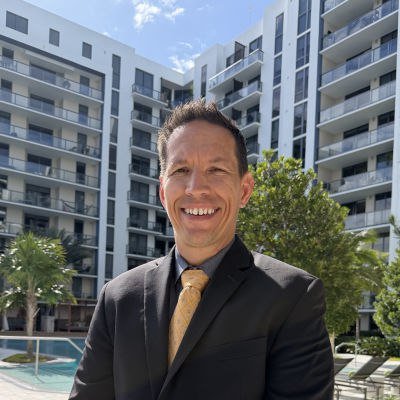
Brandon Brown is the founder of Anchor Commercial Capital, which exists to protect momentum when timing matters most. Based in Boca Raton, Florida, Brandon is a seasoned investor and technologist specializing in the intersection of commercial lending and data-driven deal execution. His professional background includes founding Rapid Surplus Refund and co-founding Lien Capital, experiences that inform his pragmatic approach to complex debt structures. Brandon is dedicated to providing sponsors with the clarity and execution certainty required in today’s volatile markets. Connect with Brandon on LinkedIn to discuss your next commercial deal.