


📅 Last Updated: February 17, 2026
The true cost of “fast funding” in commercial real estate is almost never the stated interest rate. It is the origination points, processing fees, underwriting fees, document preparation fees, wire fees, prepayment penalties, extension fees, and exit fees that transform a quoted 10% rate into an effective annual cost of 18-25%. In 2026, as South Florida’s commercial market continues to attract capital at speed, predatory lenders exploit urgency to extract fees that sophisticated sponsors would never accept — if they took the time to calculate the real cost. Speed is valuable. But speed without transparency is a momentum-killer disguised as a solution.
The Anatomy of “Fast Funding” Fee Structures
Fast-funding lenders — primarily hard money lenders and certain bridge lenders who advertise 48-hour to 7-day closings — generate revenue through a combination of interest rates and fees. The interest rate is the visible cost. However, the fees are where the real economics hide.
Here’s what a typical “fast funding” fee structure looks like in 2026:
• Origination fee: 2-5 points (2-5% of loan amount, paid at closing)
• Processing/underwriting fee: $1,500-$5,000 (flat fee, paid at application or closing)
• Document preparation fee: $750-$2,500 (flat fee, paid at closing)
• Wire/funding fee: $250-$500 (per wire)
• Inspection fees: $500-$1,500 per draw inspection (for rehab loans)
• Minimum interest requirement: 3-6 months of interest, regardless of when you pay off the loan
• Extension fee: 0.5-1.0 points per extension period (typically monthly or quarterly)
• Exit fee: 0.5-2.0 points (paid at payoff — yes, you pay to leave)
• Prepayment penalty: Remaining interest for the minimum interest period, or a percentage of the loan balance
The Effective Annual Cost Formula
To compare lenders accurately, you need to calculate the total cost of the loan over your actual hold period and convert it to an effective annual cost:
Effective Annual Cost = (Total Interest Paid + All Fees) / Loan Amount / Hold Period in Years × 100
Let’s work through a detailed example. Therefore, you’re acquiring a small retail strip center in Oakland Park (Broward County) for $1.8 million. You need $1,350,000 in financing and plan to hold for 8 months before selling.
Lender A: “Close in 5 Days” Hard Money
• Loan amount: $1,350,000
• Interest rate: 12%
• Origination: 3 points ($40,500)
• Processing fee: $3,500
• Doc prep fee: $1,500
• Wire fee: $500
• Minimum interest: 6 months (you pay 6 months even if you sell in month 4)
• Exit fee: 1 point ($13,500)
• Actual hold: 8 months
Total interest: $1,350,000 × 0.12 × (8/12) = $108,000
Total fees: $40,500 + $3,500 + $1,500 + $500 + $13,500 = $59,500
Total cost: $108,000 + $59,500 = $167,500
Effective annual cost: $167,500 / $1,350,000 / (8/12) = 18.6%
Lender B: “Close in 10 Days” Bridge Lender
• Loan amount: $1,350,000
• Interest rate: 9.5%
• Origination: 1.5 points ($20,250)
• Processing fee: $2,000
• Doc prep: included
• Wire fee: $250
• Minimum interest: 3 months
• No exit fee
• Actual hold: 8 months
Total interest: $1,350,000 × 0.095 × (8/12) = $85,500
Total fees: $20,250 + $2,000 + $250 = $22,500
Total cost: $85,500 + $22,500 = $108,000
Effective annual cost: $108,000 / $1,350,000 / (8/12) = 12.0%
Lender C: “Close in 3-4 Weeks” Credit Union
• Loan amount: $1,350,000
• Interest rate: 7.25%
• Origination: 0.5 points ($6,750)
• Processing fee: $1,500
• Appraisal: $4,500 (borrower-paid)
• No minimum interest
• No exit fee
• Prepayment: 1% in year 1
• Actual hold: 8 months
Total interest: $1,350,000 × 0.0725 × (8/12) = $65,250
Total fees: $6,750 + $1,500 + $4,500 = $12,750
Prepayment penalty: $1,350,000 × 0.01 = $13,500
Total cost: $65,250 + $12,750 + $13,500 = $91,500
Effective annual cost: $91,500 / $1,350,000 / (8/12) = 10.2%
The Comparison Table
| Cost Component | Lender A (Hard Money) | Lender B (Bridge) | Lender C (Credit Union) |
|---|---|---|---|
| Stated Rate | 12.0% | 9.5% | 7.25% |
| Origination Fee | $40,500 (3 pts) | $20,250 (1.5 pts) | $6,750 (0.5 pts) |
| Processing/Admin Fees | $5,500 | $2,250 | $6,000 |
| Exit Fee | $13,500 (1 pt) | $0 | $0 |
| Prepayment Penalty | $0 (held full min term) | $0 | $13,500 (1%) |
| Total Interest (8 mo) | $108,000 | $85,500 | $65,250 |
| Total Cost | $167,500 | $108,000 | $91,500 |
| Effective Annual Cost | 18.6% | 12.0% | 10.2% |
| Days to Close | 5 | 10 | 21-28 |
The difference between Lender A and Lender C is $76,000 — on a $1.35 million loan held for 8 months. That $76,000 comes directly off the sponsor’s profit. The question is whether closing 15-20 days faster is worth $76,000. Sometimes it is. Usually, it isn’t.
The Hidden Costs Most Borrowers Miss
Minimum Interest Guarantees
A minimum interest guarantee — sometimes called a “guaranteed interest period” — means you pay a minimum number of months of interest regardless of when you pay off the loan. If the minimum is 6 months and you sell the property in month 3, you still owe 6 months of interest. On a $1.35 million loan at 12%, that’s an extra $40,500 in interest you didn’t need to pay.
This is one of the most profitable provisions for hard money lenders and one of the least understood by borrowers. Additionally, it effectively doubles the interest cost for borrowers who execute quickly — which is ironic, because speed is supposedly the lender’s value proposition.
Extension Fees and the Escalation Trap
Most fast-funding loans have initial terms of 6-12 months. If your project takes longer — and in commercial real estate, projects routinely take longer — you need an extension. Moreover, extension fees typically run 0.5-1.0 points per extension period, and some lenders also increase the interest rate on extension.
The escalation trap works like this: your initial term is 12 months at 11% with 2 points. As a result, you need a 3-month extension at 1 point per month with the rate increasing to 13%. For example, those three extra months cost you $43,875 in interest plus $40,500 in extension fees — $84,375 total, or $28,125 per month. Consequently, at that burn rate, you’re paying an annualized cost of nearly 25% on the original loan amount.
Lenders who profit from extensions have a perverse incentive: they benefit when your project takes longer than planned. Some lenders structure initial terms aggressively short, knowing that most borrowers will need extensions. This is not an accident — it’s a business model.
Exit Fees: Paying to Leave
Exit fees — also called disposition fees or payoff fees — are charges assessed when you pay off the loan. They are typically 0.5-2.0% of the original loan amount. An exit fee is pure lender profit: you’ve already paid origination fees to get in, interest during the term, and now you’re paying a fee to get out.
Exit fees are most common with hard money lenders and certain mezzanine or preferred equity providers. They are less common (but not unheard of) with institutional bridge lenders. Meanwhile, traditional bank and credit union loans rarely include exit fees, though they may have prepayment penalties that serve a similar function.
True APR vs. Stated Rate: Why the Gap Matters
The Truth in Lending Act (TILA) requires consumer lenders to disclose the Annual Percentage Rate (APR), which includes most fees. Commercial loans are largely exempt from TILA, which means commercial lenders can quote a “rate” without including fees. A lender who quotes “10% interest” on a commercial loan with 3 points of origination and a 1-point exit fee is really charging an effective rate far above 10% — but they have no legal obligation to tell you that.
This is why sophisticated sponsors ignore the stated rate and calculate the effective annual cost using the formula above. Furthermore, the stated rate is marketing. In fact, the effective annual cost is reality.
The South Florida Urgency Premium
South Florida’s commercial market creates natural urgency. Properties trade quickly. Sellers want fast closings. Specifically, auction purchases require proof of funds within 24-48 hours. Similarly, this urgency is real — but it’s also exploited.
Predatory fast-funding lenders thrive in high-velocity markets because urgency overrides due diligence. On the other hand, a sponsor who just won a property at auction in Palm Beach County and needs to close in 10 days is not going to spend three days comparing fee structures across five lenders. They’re going to call the first lender who answers the phone and says “yes” — and that lender knows it.
The momentum-killer here is not the urgency itself — it’s being unprepared for the urgency. Sponsors who establish relationships with multiple lenders before they need them can access fast funding at fair pricing. Nevertheless, sponsors who scramble to find a lender after winning a deal pay the desperation premium.
In the Palm Beach/Broward/Miami-Dade corridor, where market velocity remains among the highest in the country, the most successful sponsors maintain a pre-approved credit facility or a standing relationship with a bridge lender. When a deal materializes, they activate an existing relationship rather than starting a new one. This eliminates the urgency premium and protects their returns.
How to Evaluate Fast Funding Offers
Before accepting any fast-funding term sheet, calculate the following:
• Total cost at your expected hold period. Not the lender’s quoted term — your realistic timeline. Include all fees, minimum interest, and potential extensions.
• Total cost if the project takes 50% longer than planned. What happens if your 8-month flip becomes a 12-month flip? Accordingly, model the extension costs.
• Effective annual cost. Use the formula above. In particular, compare this across lenders, not stated rates.
• The cost of waiting. If you can close in 21 days with a bridge lender instead of 7 days with hard money, what does the 14-day difference actually cost you?
In most cases, it costs nothing — the seller will wait two extra weeks for a higher-certainty close. In some cases (auction purchases, seller ultimatums), speed is genuinely worth paying for.
• Alternative structures. Could you achieve the same result with a bridge loan, a credit union loan, or even a private capital partner at a lower total cost?
Protecting Your Momentum — And Your Returns
Fast funding is a tool. Ultimately, like any tool, it can be used well or poorly. Notably, the sponsors who use it well understand the total cost, build the fees into their acquisition model, and choose fast funding only when the speed premium is justified by the deal economics. Essentially, the sponsors who use it poorly grab the first available capital without calculating the true cost, and watch their returns evaporate into lender fees.
In 2026’s South Florida market, the difference between a well-structured fast-close and a predatory fast-close can be 6-8 percentage points of effective annual cost — on the same loan amount, for the same property. That’s the difference between a 20% return on equity and an 8% return on equity. In contrast, the deal is the same. The cost of capital made the difference.
If you need to move fast on a deal and want to ensure you’re not overpaying for speed, connect with Anchor Commercial Capital. We maintain relationships across the fast-funding spectrum — from hard money to institutional bridge — and can source competitive terms on a timeline that matches your deal, not a timeline that maximizes lender fees.
About the Author
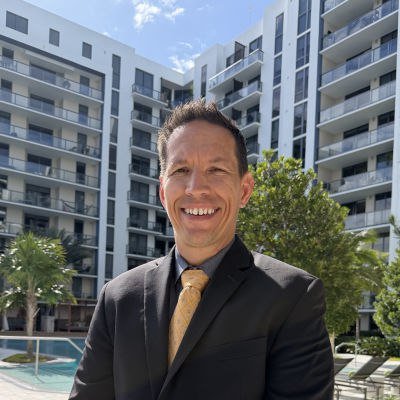
Brandon Brown is the founder of Anchor Commercial Capital, which exists to protect momentum when timing matters most. Based in Boca Raton, Florida, Brandon is a seasoned investor and technologist specializing in the intersection of commercial lending and data-driven deal execution. His professional background includes founding Rapid Surplus Refund and co-founding Lien Capital, experiences that inform his pragmatic approach to complex debt structures. Brandon is dedicated to providing sponsors with the clarity and execution certainty required in today’s volatile markets. Connect with Brandon on LinkedIn to discuss your next commercial deal.