


📅 Last Updated: February 17, 2026
Direct Answer Box
How fast can a commercial bridge loan close? Most traditional commercial lenders take 45-90 days to close. Private bridge lenders like Anchor Commercial Capital close in 5-10 business days — giving investors the speed to win competitive deals, rescue time-sensitive transactions, and protect momentum when it matters most.
The Momentum-Killer Nobody Talks About
However, here’s a number that should keep every commercial investor up at night: 47%.
That’s the percentage of commercial real estate deals that fall apart between LOI and closing, according to a 2025 CBRE survey. Therefore, nearly half. And the #1 reason isn’t price, isn’t inspection findings, isn’t zoning — it’s financing delays.
Your seller has three backup offers. Additionally, your 1031 exchange clock is ticking. Your construction crew is on standby at $8,500/week. And your bank just told you they need “another two weeks” for the third time.
That’s not a financing problem. That’s a momentum-killer.
The Math: What a 30-Day Delay Actually Costs You
Moreover, let’s run the numbers on a $1.1M commercial acquisition — our average deal size at Anchor.
| Cost Factor | 30-Day Delay Impact |
|---|---|
| — | — |
| Carrying costs (existing property) | $4,200 |
| Construction crew standby | $8,500 |
| Lost rental income (new property) | $6,800 |
| 1031 exchange risk (if applicable) | $165,000+ in tax liability |
| Seller walks to backup offer | Total deal loss |
In contrast, Conservative total: $19,500 in hard costs. That’s before you factor in the opportunity cost of the deal dying entirely.
Now calculate the Effective Cost of Speed:
“`
Bridge Loan Premium = (Bridge Rate – Bank Rate) × Loan Amount × Hold Period
Example: (11% – 7%) × $880K × 6 months = $17,600
Cost of 30-Day Delay = $19,500+
Net Savings from Speed = $1,900+ (minimum)
“`
The bridge loan doesn’t cost you more — the delay does. Every time.
Why Banks Can’t Move Fast (And Why That’s Not Changing)
Traditional commercial lenders aren’t slow because they’re incompetent. They’re slow because their model requires it:
- Committee approvals — Your loan passes through 3-5 decision-makers who meet weekly (sometimes biweekly)
- Standardized underwriting — Every deal gets the same 47-point checklist, whether it’s a $250K retail space or a $10M multifamily
- Regulatory overhead — Post-2008 compliance requirements add 15-20 days to every file
- Risk aversion — Banks don’t lose money on deals they don’t do
None of this is changing. If anything, regulatory pressure is making banks slower.
The Bridge Loan Playbook: How 5-10 Day Closings Actually Work
At Anchor, our process looks nothing like a bank’s:
Day 1-2: Term Sheet
You send us the deal. We underwrite the asset — not your tax returns from three years ago. If the property cash-flows or the exit strategy makes sense, you get a term sheet in 24-48 hours.
Day 3-5: Due Diligence
As a result, title, appraisal (often waived for strong deals), environmental review. We run these in parallel, not sequentially like banks.
Day 5-7: Legal & Docs
Our legal team drafts closing documents while due diligence is still completing. Parallel processing, not waterfall.
Day 7-10: Funding
Wire goes out. You close. Your seller never knew there was any doubt.
What We Underwrite vs. What Banks Underwrite
The South Florida Factor
| Factor | Bank | Anchor |
|---|---|---|
| — | — | — |
| Primary focus | Borrower financials | Asset value & exit strategy |
| Tax returns required | 3 years | Often none |
| Personal income verification | Always | Rarely |
| Time to decision | 2-4 weeks | 24-48 hours |
| Approval committee | 3-5 people | 1-2 people |
If you’re investing in South Florida commercial real estate right now, speed isn’t a luxury — it’s survival.
Broward County alone has over 22,800 commercial properties. For example, cap rates are compressing. Insurance costs are climbing 20-30% annually. And every serious investor in the market knows that the best deals go to whoever can close fastest and with the most certainty.
We’ve seen deals in Boca Raton where the seller accepted a lower offer because that buyer could close in 10 days with proof of funds. Price matters. But certainty of close matters more.
When a Bridge Loan Makes Sense (And When It Doesn’t)
Use a bridge loan when:
- You’re competing against cash buyers and need speed
- Your 1031 exchange deadline is approaching
- The property needs stabilization before qualifying for permanent financing
- The bank said “no” but the deal still makes sense
- You’re buying at auction and need fast proof of funds
Don’t use a bridge loan when:
- You can wait 60-90 days and the deal isn’t competitive
- The property is fully stabilized and qualifies for conventional financing today
- The numbers only work at conventional rates (if the spread kills your return, it’s not the right deal)
Protect Your Momentum
Consequently, every day your deal sits in underwriting limbo is a day your seller gets nervous, your contractor bills pile up, and your competition circles.
The bridge loan isn’t the expensive option. The delay is.
Meanwhile, when the bank says “No” — or worse, says “Maybe, in 6-8 weeks” — we architect the “Yes.”
About the Author
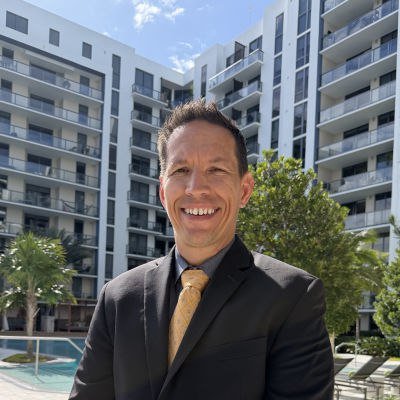
Brandon Brown is the founder of Anchor Commercial Capital, a leading provider of structured capital solutions for transitional and value-add commercial properties. Furthermore, based in Boca Raton, Florida, Brandon is a seasoned investor and technologist specializing in the intersection of commercial lending and data-driven deal execution. His professional background includes founding Rapid Surplus Refund and co-founding Lien Capital, experiences that inform his pragmatic approach to complex deal structures and lien-intensive acquisitions. Brandon is dedicated to providing sponsors with the clarity and execution certainty required in today’s volatile markets. Connect with Brandon on LinkedIn to discuss your next commercial deal.