


📅 Last Updated: October 4, 2026
A DSCR loan — Debt Service Coverage Ratio loan — qualifies you based on the property’s rental income, not your personal income. In other words, there are no W-2s, no tax returns, no employer verification. If the property’s net operating income covers the debt payments, you qualify. That’s the entire underwriting thesis. For investors with complex tax situations, multiple LLCs, or self-employment income that looks artificially low on paper, DSCR loans remove the single biggest momentum-killer in commercial lending: proving personal income to a bank that doesn’t understand your structure.
The DSCR Mistake: Using Gross Rent Instead of Lender Reality
A DSCR loan is not approved because the rent sounds high. It is approved because the lender believes the property income can cover the actual debt payment after realistic expenses, reserves, taxes, insurance, and vacancy. That distinction matters in markets where insurance or taxes can move faster than rents.
Before treating a DSCR loan as “no-income-doc financing,” investors should test the lender version of the math, not the optimistic version in the acquisition model.
Lender DSCR Reality Check
Underwritten DSCR = Stabilized Net Operating Income ÷ Proposed Annual Debt Service
What Is a DSCR Loan and Why Does It Exist?
However, traditional lenders underwrite the borrower. They want two years of tax returns, profit-and-loss statements, debt-to-income ratios, and a paper trail that proves you can afford the payment from your personal cash flow.
In practice, that model breaks down fast for serious real estate investors.
If you own eight rental properties through three LLCs and take aggressive depreciation, your Schedule E might show a loss — even though you’re collecting $40,000 a month in gross rent. A conventional lender sees that tax return and sends you a denial letter. Essentially, this isn’t because you can’t afford the loan — it’s because their underwriting model can’t process your structure.
Therefore, DSCR loans solve this by underwriting the asset, not the borrower. Ultimately, the only question that matters is this: does this property generate enough income to service the debt?
Who DSCR Loans Are Built For
- Investors with multiple rental properties and complex tax structures
- Self-employed borrowers whose tax returns understate actual cash flow
- Foreign nationals investing in U.S. real estate
- Investors scaling portfolios who need speed over traditional underwriting timelines
The DSCR Formula: How Lenders Actually Calculate It
Here’s the formula:
DSCR = Net Operating Income (NOI) ÷ Annual Debt Service
That’s it. In essence, one number decides whether you qualify.
- Net Operating Income (NOI): Gross rental income minus operating expenses (property management, insurance, taxes, maintenance, vacancy reserves). Does not include mortgage payments.
- Annual Debt Service: Total annual mortgage payments (principal + interest).
The Threshold
Additionally, most DSCR lenders require a minimum ratio of 1.0x to 1.25x, depending on the program:
Deal Math: A South Florida Rental Property Example
| DSCR Ratio | What It Means | Typical Lender Response |
|---|---|---|
| — | — | — |
| Below 0.75x | Property loses money after debt service | Decline |
| 0.75x – 0.99x | Property doesn’t fully cover payments | Limited programs, higher rates |
| 1.0x | Breakeven — income exactly covers debt | Minimum threshold for many lenders |
| 1.25x+ | Property generates 25%+ cushion above debt | Strong approval, better terms |
| 1.50x+ | Significant cash flow surplus | Best rates and highest LTV available |
Let’s run a real scenario. Moreover, you’re looking at a duplex in Pompano Beach listed at $420,000. Each unit rents for $2,100/month.
Step 1: Calculate Gross Rental Income
- 2 units × $2,100/month = $4,200/month
- Annual gross rent: $50,400
Step 2: Subtract Operating Expenses
| Expense | Annual Cost |
|---|---|
| — | — |
| Property taxes | $7,200 |
| Insurance (South Florida — expect this to be elevated) | $4,800 |
| Property management (8%) | $4,032 |
| Maintenance reserves (5%) | $2,520 |
| Vacancy reserve (5%) | $2,520 |
| Total Operating Expenses | $21,072 |
- NOI = $50,400 – $21,072 = $29,328
Step 3: Calculate Annual Debt Service
For this scenario, assume a loan amount of $336,000 (80% LTV) at a rate of 8.25% with 30-year amortization.
- Monthly payment: approximately $2,523
- Annual debt service: $30,276
Step 4: Calculate DSCR
DSCR = $29,328 ÷ $30,276 = 0.97x
In contrast, at 0.97x, this deal is below the 1.0x threshold for most lenders. You have three options:
1. Increase the down payment to reduce debt service — putting 25% down drops annual payments to roughly $27,135, pushing DSCR to 1.08x.
2. Negotiate a lower purchase price — at $400,000 with 20% down, the numbers shift.
3. Demonstrate higher market rents — if comparable units in the area lease at $2,250, the projected NOI changes your ratio.
As a result, this is exactly the kind of math you should run before you submit an application — not after a lender runs it for you.
South Florida Market Context: Why DSCR Loans Are Surging Here
For example, South Florida’s rental market has specific dynamics that make DSCR loans particularly relevant in 2025-2026:
Insurance Is the Hidden Variable
Property insurance in Broward and Palm Beach counties has increased 40-60% over the past three years. Consequently, that directly reduces NOI and compresses your DSCR ratio. Investors who modeled deals in 2022 with $2,400/year insurance are now paying $4,800 or more on the same property. For this reason, every DSCR calculation in South Florida must use current insurance quotes — not historical numbers.
Rent Growth Supports the Model
Despite insurance headwinds, South Florida rents have remained strong. Fort Lauderdale, Boca Raton, and West Palm Beach continue to see rental demand driven by population migration, limited housing supply, and corporate relocations. Consequently, a duplex or small multifamily that barely hit 1.0x DSCR two years ago may now clear 1.25x on current market rents.
The Condo Market Complication
Post-Surfside legislation (SB 4-D) has increased reserve requirements and special assessments for condominiums across South Florida. If you’re evaluating a condo as a DSCR-financed rental, factor in elevated HOA fees and potential special assessments. As a result, many DSCR lenders have added condo-specific overlays — some won’t lend on condos at all in certain zip codes.
DSCR Loans vs. Conventional Investment Property Loans
| Feature | DSCR Loan | Conventional Investment Loan |
|---|---|---|
| — | — | — |
| Income verification | None — property income only | Full personal income documentation |
| Tax returns required | No | Yes (2 years) |
| Number of properties | No limit | Fannie Mae caps at 10 |
| Closing timeline | 14-21 days typical | 30-45 days |
| LTV | Up to 80% | Up to 80% |
| Rate | Higher (7.5%-9.5% range) | Lower (6.5%-7.5% range) |
| Best for | Portfolio builders, complex structures | W-2 earners with clean tax returns |
Admittedly, the rate premium on a DSCR loan is real — typically 100-200 basis points above conventional. However, the momentum cost of spending 45 days trying to qualify through a bank, only to get denied because your tax returns show depreciation losses, is far more expensive than a slightly higher interest rate.
What DSCR Lenders Actually Look At
If they’re not looking at your income, what exactly are they evaluating? In particular, four factors drive the decision.
Credit Score
Most DSCR programs require a minimum 660 FICO, with better terms at 720+. Nevertheless, your credit history still signals risk to the lender.
Property Appraisal and Rent Schedule
Meanwhile, the lender orders an appraisal that includes a rent schedule (Form 1007 or 1025 for residential, market study for commercial). The appraiser’s rent estimate — not your optimistic projection — drives the DSCR calculation.
Reserves
Furthermore, expect to show 6-12 months of reserves (mortgage payments) in liquid assets. This isn’t income verification — it’s proof you can weather a vacancy.
Entity Structure
In fact, most DSCR loans close in an LLC, which is actually preferable for liability and tax purposes. The LLC is the borrower; you personally guarantee the loan.
Common Mistakes That Kill DSCR Applications
1. Using asking rents instead of market rents. Specifically, the lender uses appraiser-determined rents, not your Zillow estimate.
2. Ignoring insurance costs. In fact, in South Florida this is the number one reason deals fall below the DSCR threshold at underwriting.
3. Applying at the wrong LTV. If you’re borderline on DSCR, a slightly larger down payment can move you from decline to approval.
4. Not having reserves. Although DSCR lenders are lenient on income, they remain strict on liquidity.
Protecting Momentum: When Speed Matters More Than Rate
Here’s the scenario that plays out weekly in South Florida: An investor finds a four-unit property in Oakland Park at a price that works. The seller has multiple offers. Naturally, the investor calls their bank, which asks for two years of tax returns, a personal financial statement, and three months of bank statements — then quotes a 35-day closing timeline.
Specifically, by day 10, the seller takes another offer with proof of funds and a 14-day close.
Similarly, the bank didn’t say no. They said “wait.” And in a market where inventory moves in days, “wait” and “no” produce the same result.
A DSCR loan closes in 14-21 days. On the other hand, the underwriting is straightforward: does the property cash flow? If yes, you close. As a result, that speed isn’t a luxury — it’s the difference between acquiring the asset and watching someone else acquire it.
Next Steps
If you’re evaluating a rental property and want to know whether it qualifies under DSCR guidelines, run the math first. Importantly, calculate your NOI with current South Florida insurance rates — not historical ones. Use conservative rent estimates, and then bring us the deal.
Need a DSCR pre-qualification in 24 hours? Schedule a 15-minute deal review — we’ll run the numbers and tell you exactly where you stand.
About the Author
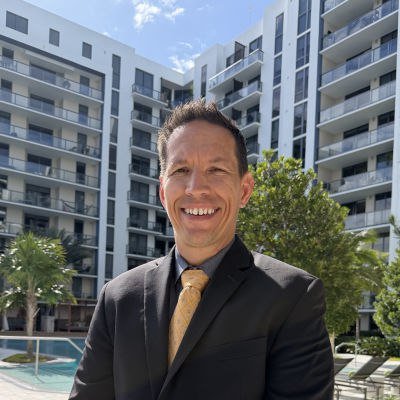
Brandon Brown is the founder of Anchor Commercial Capital, a leading provider of structured capital solutions for transitional and value-add commercial properties. Based in Delray Beach, Florida, Brandon is a seasoned investor and technologist specializing in the intersection of commercial lending and data-driven deal execution. His professional background includes founding Rapid Surplus Refund and co-founding Lien Capital, experiences that inform his pragmatic approach to complex deal structures and lien-intensive acquisitions. Brandon is dedicated to providing sponsors with the clarity and execution certainty required in today’s volatile markets. Connect with Brandon on LinkedIn to discuss your next commercial deal.